How Lebanon is replacing the collapsing lira with the dollar
US currency replaces lira in shops, as Lebanese struggle to keep up with freefalling currency
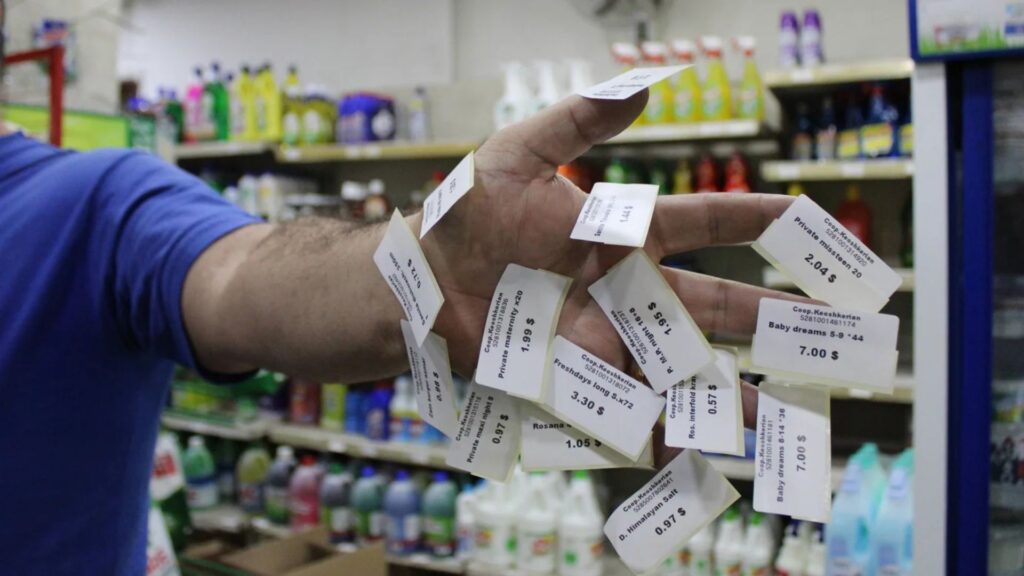
Beirut, Lebanon — A bustling row of shops in Beirut’s Armenian neighbourhood, Bourj Hammoud, is now covered in dollar signs.
The scene in Bourj Hammoud is echoed across Lebanon – as the country’s lira plummets to record lows, shop owners are increasingly opting to display prices in the more stable US currency.
A short walk down the dollar-plastered windows is a small supermarket, where 42-year-old Razmig Keoshkerian frantically changes the price labels.
For the past 20 years Keoshkerian has run the supermarket with his brother, but nothing, he says, has compared to the stress they have faced in the last three years amid the country’s economic crisis.
The Lebanese lira has been in freefall; the country’s largest 100,000 lira bill is now worth less than $1, a staggering decline from $66 before the financial crisis hit in 2019. The Lebanese currency was rated the worst performing in the world this year, according to data compiled by Bloomberg.
“The lira has lost its role as a currency,” Layal Mansour, an economist specialising in dollarised countries, tells Middle East Eye. “We can never expect Lebanon to restore its currency trust, economically speaking, theoretically speaking, or practically speaking,” she says.
Due to the lira’s dramatic fluctuations, each day Keoshkerian does not adjust the prices he loses money.
“Every day is a marathon,” he tells MEE, “You go to sleep and you know how much you will lose because you didn’t change the price…It must be changed, but sometimes I don’t have enough time.”
Since the government’s decision this month to allow supermarkets to price in dollars, Keoshkerian has been trying to switch to using the US currency. With dollars, the prices will not fluctuate as drastically, and Keoshkerian can more easily account for his earnings and losses, he says: “If you have dollars, there is not as much of a problem.”
Leila Dagher, an economics professor at the American University of Beirut (AUB), tells MEE that the decision to allow pricing in dollars “should have been made long ago because it primarily protects consumers”.
With dollars, the price fluctuations are minimised and consumers can more easily compare prices without the constant changes, thus increasing competitiveness between shops, she says.
Now, about half of Keoshkerian’s goods are priced in dollars, and he hopes more will be soon. “Of course, I will sleep better if the items are in dollars,” he says.