Syria’s Yazidi Community Faces the Future With Concern
Having survived Assad and the Islamic State, Yazidis remain suspicious of Sharaa’s government.
28 November 2025
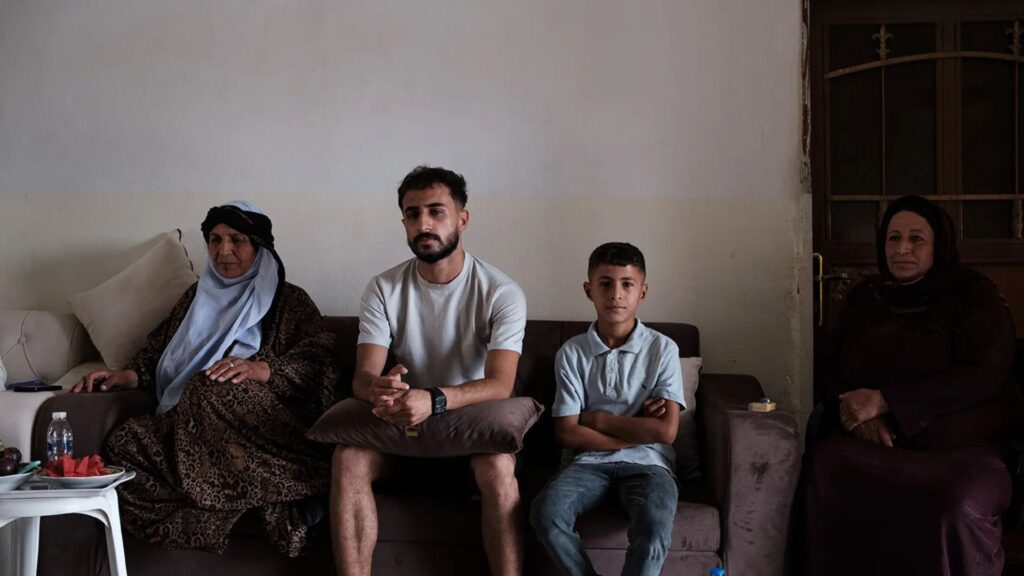
Hasakeh, Syria – Just outside the small Yazidi village of Barzan, in northeastern Syria, 10-year-old Shadi Rasho stood up to recite a prayer. His light but melancholic voice continued for a few minutes as the room listened in silence.
“This is what children who stay here can do,” said Shadi’s older brother, 21-year-old Souliman Rasho.
Most of the family’s relatives have left for Europe—driven away by the discriminatory policies that Syrian authorities enforced over decades and persecution by the Islamic State. Yazidis are a predominantly Kurdish-speaking ethno-religious minority, historically inhabiting parts of modern-day Iran, Iraq, Syria, and Turkey. Their religion, which dates back thousands of years, includes pagan, Zoroastrian, Christian, and Muslim elements.
Souliman gestured to a framed symbol of a peacock, hung in the center of the living room. For Yazidis, the peacock’s name is Melek Taus, an angel who beautified the earth at its creation. Etched below the peacock’s feet was a small drawing of the Yazidi Lalish Temple in Iraq.
Yazidis have long faced persecution. Other faiths have misinterpreted Melek Taus as Satan and therefore accused Yazidis of being “devil-worshipers.” Members of the Yazidi community say they have endured 74 genocides over the millennia. The most recent was carried out by the Islamic State, which killed more than 3,000 Yazidis and enslaved, raped, and forcibly converted nearly 7,000 others.
Over the last decade, many Yazidis in Syria gained official recognition and a sense of protection under the Kurdish administration—which still controls much of the northeast. But now, with the arrival of Ahmed al-Sharaa’s government, Syria’s Yazidis are uncertain of their future yet again. U.S.-backed Kurdish forces are now facing increasing pressure to merge into Sharaa’s national army—which has been implicated in massacres of other religious minorities in the country.
“We are all afraid of the new government,” said Layla Mehmo, one of the directors of the Yazidi House, an umbrella organization defending the rights of Yazidis in Syria. “We saw what happened to the Alawites and the Druze. They [the government] have the same mentality of ISIS.”