Lebanon: What a stabbing in small town says of rising hostility against Syrian refugees
Syrian refugees feel unsafe in Lebanon amid rising violence and threat of deportation
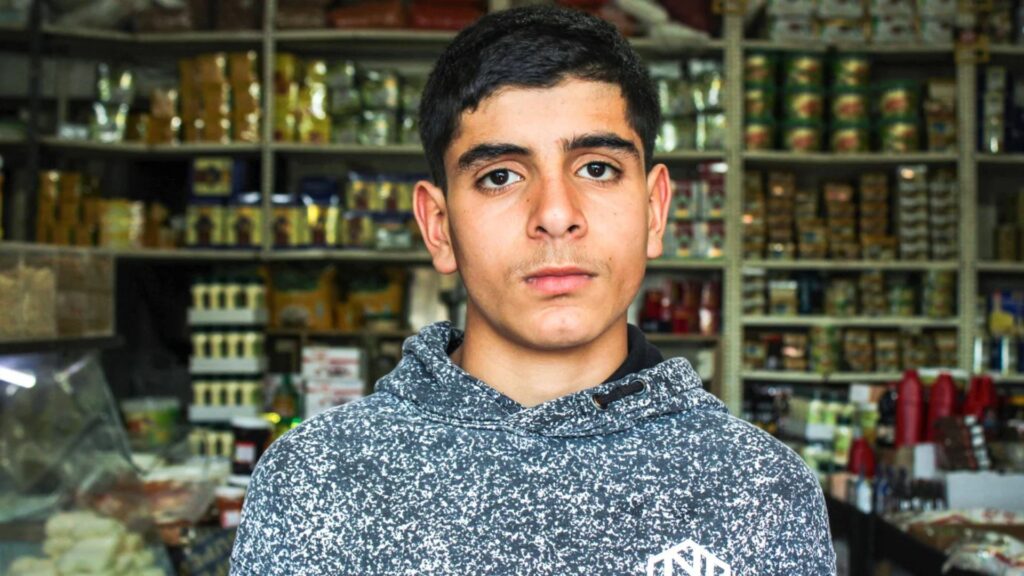
Jbeil, Lebanon – In Mohammed Amro’s supermarket in Lebanon‘s Nahr Ibrahim, the floor is stained with blood and the roof pierced by two bullet holes – the scars of a brutal attack on his two sons.
The small northern town, wedged between the sea and the mountains, is usually a peaceful place, where people of all religions coexist, said most residents Middle East Eye interviewed.
But during the recent Eid al-Fitr holiday, usually a moment of joy to mark the end of Ramadan, the peace was broken.
At 8.30pm on 23 April, 13-year-old Sajed and 18-year-old Youssef were helping in their father’s shop, when they saw a group of armed men with metal bars and handguns assaulting an unknown Syrian man outside.
“My brother was witnessing the scene without doing anything,” Sajed told MEE.
“Then, out of nowhere, someone approached him and hit him with a thick stick. My brother tried to defend himself by kicking him off, so 20 other people followed, pulled out their knives and started stabbing him.
“Then they pulled out a gun”, shot on the floor and the ceiling, and “stabbed me in the head”.
Youssef, who was stabbed four times, survived the attack but was left with 20 stitches and a broken nose. Meanwhile, 10 medical staples keep Sajed’s wound from gaping open. Although the pain is gone and the boy can return to school, he spoke about the attack through clenched a jaw and in brief sentences.
Mohammed said: “The knife that stabbed him was one millimetre close to killing him.” He was home when he witnessed the assault over the live security camera footage before rushing to the scene.
“I felt that my son was going to die,” he said.
The group of attackers was made up of two policemen and some citizens who claimed they worked for the Nahr Ibrahim municipality and were there to enforce a 9pm curfew, enacted six months ago on all shops in town.
“We limited opening hours at night to have more security, because Syrian immigrants with no legal papers were entering the area, and we could not monitor them,” Nizar Daccache, a chief administrator in the municipality office, told MEE.
On the evening of the attack, the men were sent to control “Syrians causing problems in the area”, he said.
Mohammed said the group regularly patrols the shops near his own business and harasses the mostly Syrian shopowners. This was their motive on the night of the attack – not to actually enforce the curfew, he said.