Letter from Beirut: a deadly week for a city on the brink
Exploding devices, packed hospitals and now targeted missile strikes have terrorised the Lebanese capital.
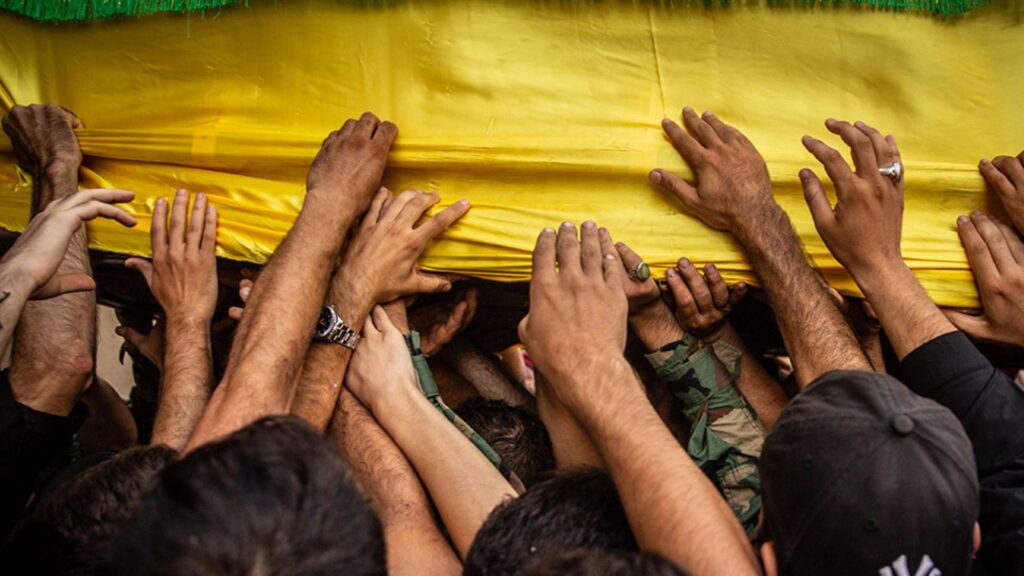
Beirut, Lebanon – Scenes like those out of a horror film unfolded in Lebanon this week. Randa Najdi, a 35-year-old Arabic teacher, was meandering through a crowded market in southern Beirut on 17 September when an explosion sounded and chaos erupted as shoppers ran in panic around her. A man in the crowd fell to the ground, screaming in agony.
He was just one of thousands of people carrying handheld pagers, which almost simultaneously exploded in homes, cars, and shops across the country. Israel is widely believed to have carried out the attack, which targeted the Lebanese militant group, Hezbollah, but also killed two children and health workers. A second round of explosions erupted the next day, bringing the death toll to 37 and leaving over 3,600 wounded in total.
Randa told me that minutes after the first attack, dozens of frantic calls and texts poured in from friends. “There’s a guy in a jeep whose thigh got blown up” or “Someone’s intestines are out!” were among those messages she received.
Hezbollah and Israel have been engaged in near-daily clashes at Lebanon’s southern border, which have been escalating since Hezbollah joined the fight against Israel on 8 October, working under the umbrella of the Iran-led “axis of resistance”. The Lebanese armed group emerged in the early 1980s, during Israel’s occupation of the south of the country, and today has become Iran’s most powerful proxy in the region and an influential political actor in Lebanon. Though the cross-border strikes have taken place regularly over the past year, the mass explosion of communication devices and other technologies used by Hezbollah members reflects a notable and escalatory shift in the conflict.
Sirens roared through Beirut as ambulances rushed victims, many with missing eyes and hands, to hospitals in the Lebanese capital. While the pagers were owned by Hezbollah members, there were no guarantees who was holding the device at the time it was detonated. The Associated Press reported that some who used the pagers were also members of the group’s civilian operations, including doctors, nurses, teachers, and charity workers.
Nour el-Osta, a 30-year-old doctor at Hotel Dieu hospital in Beirut, treated over 120 victims of the blasts who arrived at the hospital after the first attack. “Most had eye and hand injuries, many had lost their fingers. Some had brain damage, which we think is due to the high impact of the explosion,” she told me.
Operations were carried out on 60 patients, the majority of whom lost “at least” one eye, Dr. Osta said. According to the Lebanese television channel, MTV Lebanon, over 500 individuals suffered from eye injuries and 300 are now blind.
The following day, schools were closed in Lebanon as the country processed the bloody scenes they had witnessed. But the period of mourning was cut short when another round of explosions went off – this time, walkie-talkies, electronic appliances and even solar panels .
Some in Lebanon placed their phones or other electronics far away from them, fearful they might combust at any moment. “I don’t feel safe at all,” Najdi told me. “Now, everyone is targeted, all areas are targeted… I am scared to hold my phone, and I am scared to hold my laptop.” (“Be careful of your phone,” a young woman at a Beirut café warned me after the walkie-talkie explosions.)