'With Israel no one is safe': North Lebanon village reels after deadly air strike
An attack on a Christian village that killed 23 has left residents shaken as Israel widens its target scope across Lebanon
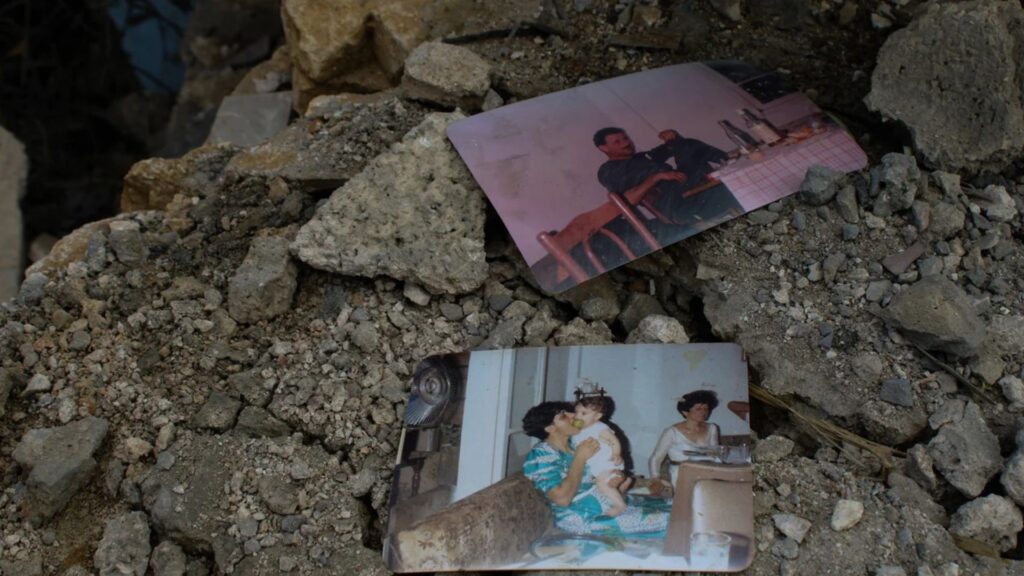
Aitou, Lebanon – The sweet, sickly smell of human flesh permeated the air in the mountain village of Aitou, in northern Lebanon. Rescue workers dug through the rubble, picking up body parts of the men, women and children killed in an Israeli air strike on Monday.
Childrens’ clothes, likely blown out in the blast, hung on olive trees, broken and coated in grey cement dust. Next to blood-soaked stones were spoons, shoes, coffee pots, and family photos.
The Israeli strike killed at least 23 people and wounded eight others – leaving not one person in the building unscathed. The attack was the first time the Christian-majority village has been targeted since Israel and Hezbollah began fighting over a year ago.
The normally quiet village is far from Hezbollah’s main areas of influence in the south and east of the country, which have suffered the brunt of the Israeli attacks.
The owner of the now-demolished apartment building, Eli Alwein, 42, told MEE he had rented it out to around 28 people from the Hijazi family, who had fled their southern border village of Aitaroun and had been living in the apartment for about 20 days.
Eli said that just before the Israeli attack at around 2pm on Monday, five strangers drove up to the building in two vehicles unfamiliar to local residents and offered the displaced families money and aid, based on the testimony of his brother, who lives next door with his wife Jihane.
Cars around the scene of the attack were destroyed, their windows blown out and bodies crushed from the force of the blast. One vehicle bore significantly more damage than the others, it was warped and charred and its hood had been completely demolished. Eli said the vehicle was one of the two vehicles that had come to visit the residents.
Israel said it struck a target linked to Hezbollah, without providing details nor evidence, but the United Nations has called for an independent investigation.
“Even if there was someone from Hezbollah here, they shouldn’t attack places where women and children are taking shelter. [Israel] has its own ways of targeting these leaders, but they shouldn’t attack where civilians are located,” said Rene Mouwad, one of Eli’s relatives who arrived at the scene about 15 minutes after the strike.
Richard Weir, a senior crisis, conflict, and arms researcher at Human Rights Watch, told MEE: “Any attack must take into account the basic laws of war, which require an attack to be proportionate, discriminate, and for the attacker to take all feasible precautions to avoid or otherwise limit civilian harm. This includes the choice of weapon, as well as the time and location of the attack.
“Israel has demonstrated its ability and weapon choice to tailor its strikes to limit their effects,” Weir said.