The torture, sexual violence and social stigma faced by Syria's women prisoners
Dealing with immense trauma, women survivors of Assad’s prisoners are struggling to return to a sometimes unwelcome society
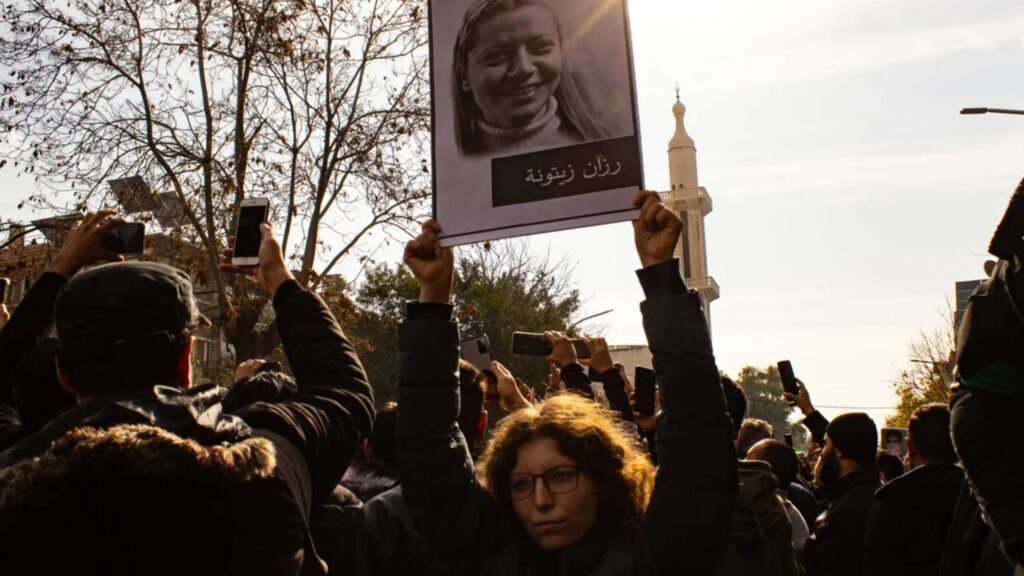
20 December 2024
Damascus, Syria — Women’s undergarments lay on top of a pile of clothing stacked outside a massive freezer where the bodies of dead prisoners had been stored.
Not long ago, the undergarments had most likely been stripped off women prisoners killed in Syria’s notorious Sednaya prison, known as the “human slaughterhouse”.
“Here, there was very brutal cruelty, in every sense,” said Khaled Mohammad al-Khan, an opposition fighter from the country’s southern governorate of Daraa. “It was disgusting, slaughter, hanging, and rape,” he said, as he showed Middle East Eye around the prison compound.
Khan was at Sednaya prison on 8 December, when hundreds of inmates were released following the overthrow of Bashar al-Assad’s administration. Among those released were dozens of women and girls, he said.
The rebel fighter recalled an unmarried 16-year-old girl, with five young children, whom he spoke with briefly just as she was leaving. “They didn’t believe they were leaving the prison, they were afraid. ‘Who are you? Who are you?’ they asked us,” he said.
Khan said when he first arrived he saw about 50 women on the prison’s surveillance cameras, in the compound’s underground cells.
Before the downfall of Assad, thousands of women were being held in an infamous network of prisons, where inmates were known to be subject to ruthless forms of torture, beaten, and deprived of food, water, medicine and basic sanitation.
Female prisoners face a unique set of challenges, including rampant sexual violence and social stigmatisation upon their release.