Lebanon’s southern villagers confront Israeli soldiers as they fight to return
Facing an extended occupation of their villages, residents defy Israeli military orders to stay away
1 February 2025
Maroun al-Ras, Lebanon – On the outskirts of the southern Lebanese border village of Yaroun, residents stood atop a dirt barricade, looking down at their homes and olive groves. Below, Israeli soldiers waited, their snipers ready for anyone who dared to cross.
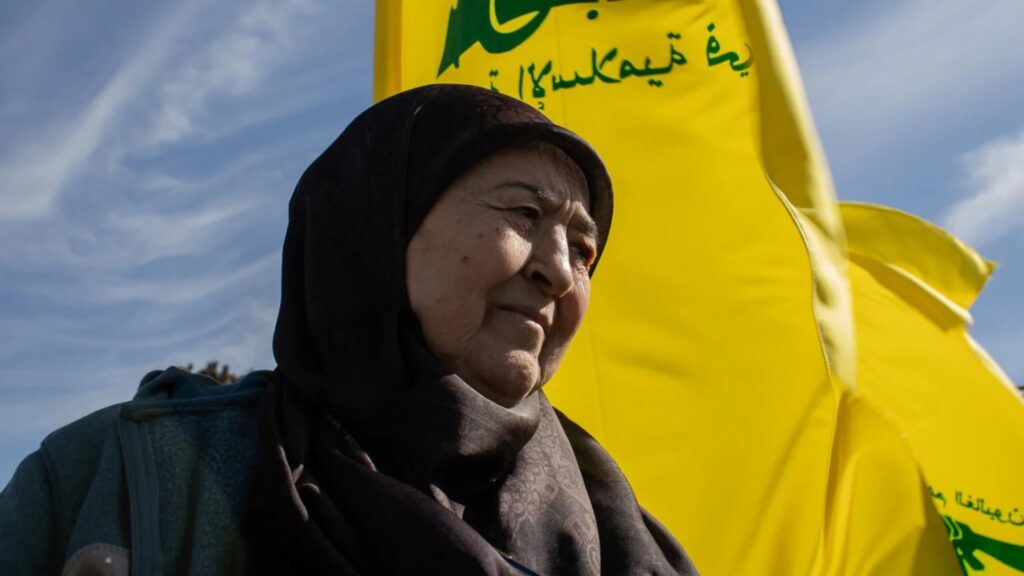
An elderly woman, Fatima Jaafar, boldly climbed down from the barricade and was soon followed by a young man waving a Hezbollah flag. Seconds later, Israeli gunshots rang out, and the two rushed back, narrowly escaping the fire.
Yaroun is one of several villages where Israeli troops remain stationed after the 26 January withdrawal deadline set by the US-brokered ceasefire agreement. Israel has accused Lebanon of not fully enforcing the terms, while the US announced the agreement would remain in effect until 18 February.
Despite the lingering presence of Israeli troops, many residents of villages in southern Lebanon are determined to return in defiance of Israeli orders.
Near the barricade in Yaroun, a group of people camped beside a roaring fire said they had been there for three days when Middle East Eye visited on Tuesday.
One of them was a 51-year-old woman who asked to be referred to as Imm Hassan. “I have my house [in Yaroun]. I had chickens and goats. I was living a very happy life,” she told MEE.
“This is our land. When I die, my kids will come; my grandkids will come,” she said. “No one can leave their land, especially next to this neighbour who wants to take it over.”
Like many from Yaroun, Imm Hassan holds US citizenship and speaks in a crisp American accent. She says her heart is in Yaroun, the village of her ancestors and the place where she has lived most of her life.
“Yaroun is a very special place, with very special nature,” Imm Hassan said, describing its bountiful farmland and “heavenly” forest of ancient oak trees, where she would often bring her goats to graze and picnic with her friends.
But much of that land, she says, is now gone. “They’re trying to make a desert here, to make it inhabitable.”