As Lebanon cracks down on Syrians, it becomes ‘dangerous’ to defend them
As Lebanon deports and evicts Syrian refugees, pressure on journalists and advocates working to bring violations to light is also increasing, forcing some to leave the country or stop their work, just when it is needed most.
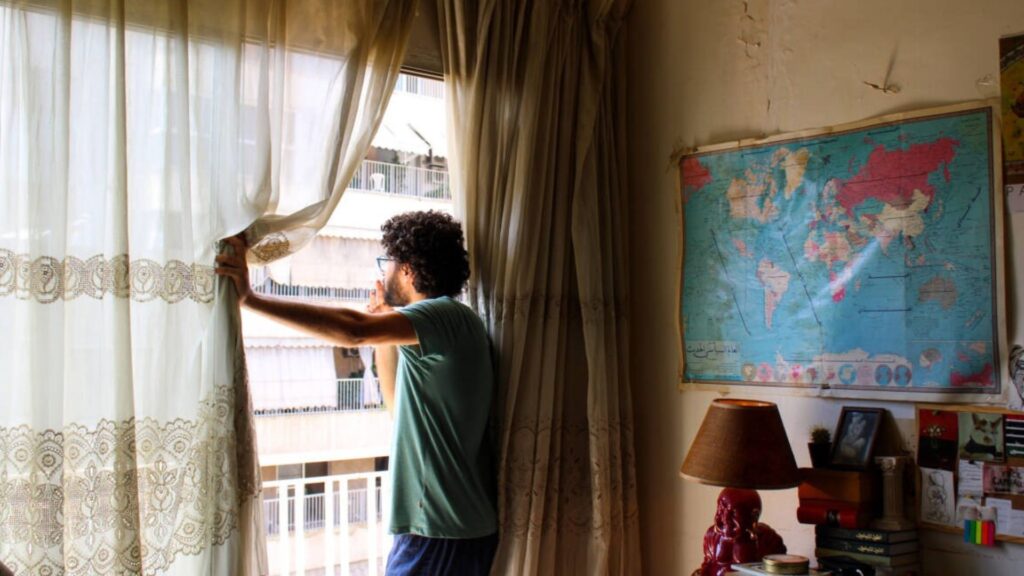
Beirut, Lebanon – Stacks of books line every corner of the small home office in Beirut where Mutasim Khalaf spends his days writing. A poster of the Palestinian novelist Ghassan Kanafani adorns one wall, its neighbor an advertisement for the 1954 Damascus International Fair, held years before former Syrian President Hafez al-Assad, and later his son, Bashar, would rule the country. Vintage maps, postcards, and family photos fill the rest of the room: snippets of a life in Syria, Turkey, and now Lebanon.
“This is everything I own,” 31-year-old Khalaf said, gesturing around the room. “This is my space within this sometimes terrifying city.”
Khalaf is one of the few Syrian and Lebanese journalists and advocates in the country shedding light on violations against Syrian refugees. As hostility against Syrians in Lebanon grows and the government steps up repression, their work is increasingly scrutinized, and their numbers are shrinking.
“We need to tell the truth, to give marginalized groups like Syrians a voice,” Khalaf said. “But it’s become dangerous to write the truth. They’re trying to make it harder and harder.”
Reporters Without Borders (RSF), an international nonprofit defending journalists, warned on June 14 that warming relations between Damascus and its neighbors is putting Syrian journalists living in Lebanon, Jordan, Iraq and Turkey, at growing risk of being forcibly returned to Syria, “where they face imprisonment and, in some cases, death.”
RSF, alongside the Syrian Center for Media and Freedom of Expression, noted that these countries follow several measures to justify the deportation of Syrian refugees—often under the pretext of “voluntary return”—and have not taken any steps to protect or prevent the deportation of journalists who have arrest warrants against them in Syria.
Khalaf grew up in the Yarmouk camp for Palestinian refugees in Damascus, surrounded by a vibrant community of artists and writers. In the years following the 2011 Syrian uprising, most of the camp—along with its once-thriving artistic circles—was destroyed, primarily by pro-regime forces over years of siege, bombardment and massacres. Khalaf fled Syria in 2016, but remembering his childhood in Yarmouk, he began to write. “The last thing we have is our words, our voices,” he said.
He frequently covers topics related to the arbitrary arrest, detention and deportation of Syrian refugees in Lebanon. There are not enough Syrian journalists—or journalists in general—focused on these issues, he said.
“Most Syrian journalists in Lebanon fear threats and the impact their work might have on their lives,” he added, explaining that many have abandoned journalism for safer fields, or have left the country altogether.