Challenges confront Lebanon on the long road to reconstruction
“The Gulf countries are waiting to see what will happen next, how the new government will run the country, and if it will fall into the hands of Hezbollah.”
16 January 2025
Nabatieh, Lebanon — Over the past week, Lebanon gained both a new president and prime minister-designate, raising hopes for a recovery from years of economic collapse and reconstruction after the 14-month war between Israel and Hezbollah that ended in a ceasefire late last November.
On 14 January, in his first speech since being asked to form a government, prime minister-designate Nawaf Salam pledged to ”rescue, reform, and rebuild” his country. But with one early estimate putting the impact of physical damage and economic losses from the conflict at $8.5 billion, and donors either strapped for cash or unwilling to give, finding that much money will be no easy feat.
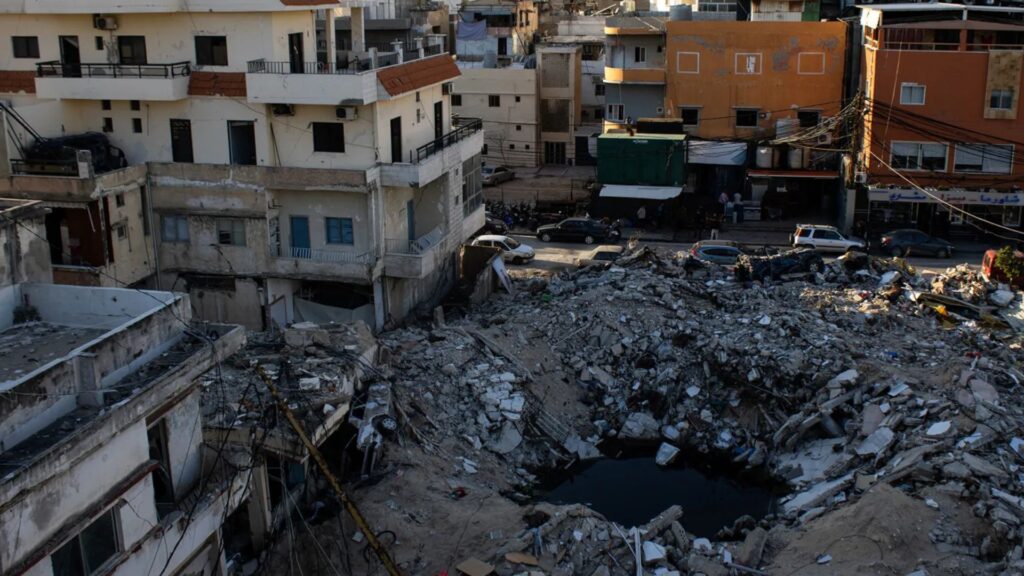
The need to rebuild is stark in Nabatieh’s historic marketplace, where business owners were hauling piles of dusty debris and tattered merchandise out of shops in the south Lebanon city when The New Humanitarian visited in mid-December.
Walaa Karamboush, 33, surveyed a pile of massive rubble in the market, which had been a shop called “V-Real Shoes and Bags”. Before Israel’s bombs – which it said were targeted at Hezbollah but also hit residential areas and civilian infrastructure – there had been rows of shoes and colourful handbags, carefully displayed behind large glass windows.
For nearly six years, Karamboush was one of the shop’s 10 employees. “Our lives were there, my friends were there. I felt like it was my second home,” she said. But the shop was hit while she was displaced in Beirut, and without an income the single mother of four can no longer afford the rent on her flat in her nearby village of Zawtar.
Karamboush is staying with her sister for now, but there’s no telling when – or if – she’ll have a job or her own place again. Since the ceasefire, an estimated 900,000 people like her, who fled the fighting and Israeli bombardment, have returned to their home cities and villages.
While many celebrated their initial ability to go back to the battered south after so long, they are now facing the harsh reality of what life after the war really looks like, with little help to deal with their losses.