Hamas and Hezbollah: Growing coordination in Lebanon?
Analysis: Recent rocket fire from Lebanon could demonstrate deepening ties between the groups, analysts say.
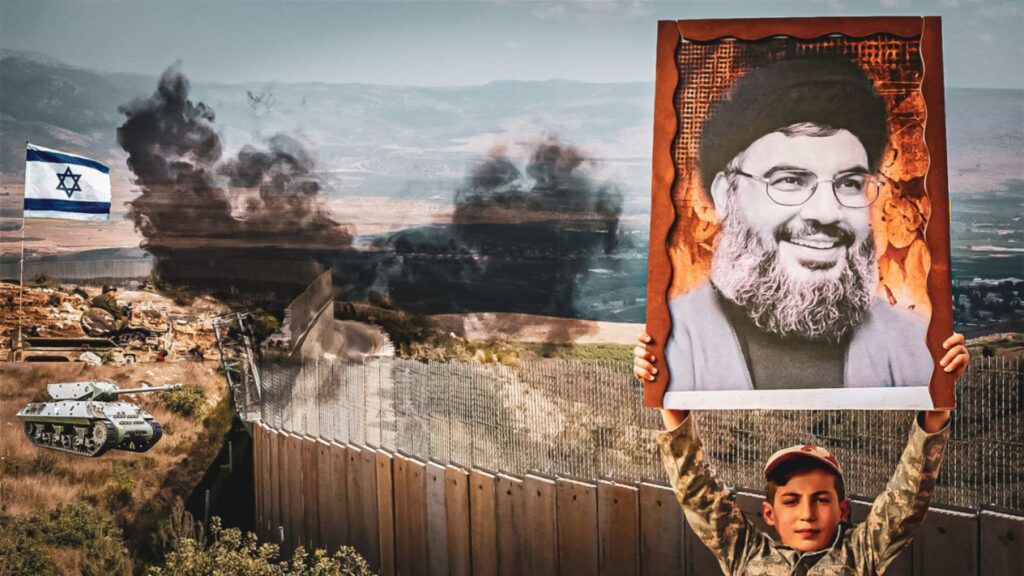
Beirut, Lebanon – A recent rocket barrage from Lebanon across its southern border with Israel — the most intense in nearly seventeen years — could demonstrate growing coordination between Hezbollah and Hamas, analysts say.
Over 30 rockets were launched on 6 April from areas controlled by Hezbollah in Lebanon’s south. Hezbollah likely authorised the rocket fire, experts say, as an attack of this size would hardly have gone unnoticed in its backyard.
Israel responded by launching strikes on alleged Hamas targets in Lebanon and Gaza, a deliberate choice to avoid igniting a wider conflict with Hezbollah.
The Lebanese group has neither endorsed nor criticised the rocket fire from Lebanon. While no group has officially claimed responsibility, security and UNIFIL sources say Palestinian groups were behind the incident.
“It shows that Hezbollah wants to keep its narrative of resistance against Israel, while at the same time, [Hezbollah] doesn’t want to look like it’s part of a provocative action,” said Sami Nader, the director of the Beirut-based Levant Institute for Strategic Affairs.
The Lebanese group wanted to avoid an Israeli retaliation on its assets, which would propel them to respond and risk the outbreak of another war – a catastrophic outcome for Lebanon as it faces one of the world’s worst economic crises.
Hezbollah has emerged as the country’s most powerful political actor, seizing more opportunities to expand in the last three years of an economic crisis.
But another war, which the country’s current economic capacity could not sustain, would undermine the group’s image as a legitimate threat to Israel — a significant driver of the party’s domestic support, said Hilal Khashan, a professor of political science at the American University of Beirut (AUB).
“Hamas does in Lebanon what Hezbollah can no longer do,” Khashan told The New Arab.
Hezbollah is instead sticking to a “policy of silence” regarding Israel’s retaliatory strikes, the party’s leader, Hassan Nasrallah, said in a televised speech on Friday.
Nasrallah also warned in the speech that Israel’s “reckless actions in Jerusalem” might lead the region to a “major war”.
The military component of Hezbollah’s anti-Israel stance has expired, Khashan said. “Hezbollah will continue to criticise Israel, condemn Israel, and disseminate anti-Israeli propaganda, but it will not take military action…,” he added.