What's driving Israel's escalation in south Lebanon?
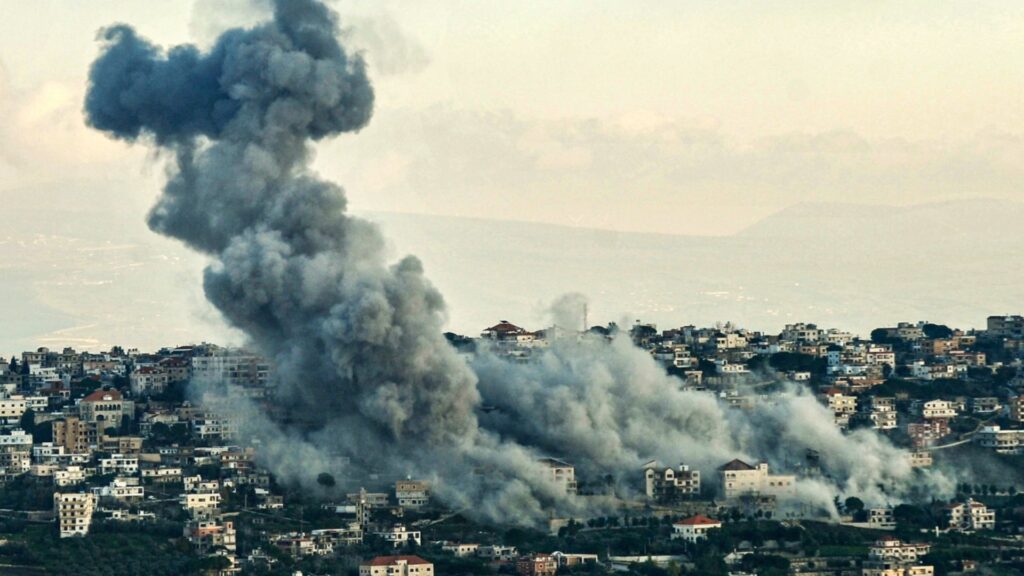
Analysis: Israel’s attacks on Lebanon are growing more aggressive and indiscriminate, signalling that its rules of engagement with Hezbollah could be changing.
21 February 2024
On the evening of 14 February, an Israeli missile tore through Hussein Ahmad Berjawi’s home, reducing it to rubble and killing Hussein and six of his family members.
Hussein’s three-year-old grandson was pulled from the rubble, the young boy and his father the only survivors among those who had gathered together that evening.
It was the bloodiest civilian death toll from a single strike since the fighting between Hezbollah and Israel erupted on Lebanon’s southern border on 8 October.
Hussein and his family members were sitting down for dinner just above three Hezbollah fighters, who were meeting on the ground floor of the apartment building in Lebanon’s southern city of Nabatieh. The three fighters – including Hezbollah’s elite Radwan Force commander Ali al-Debs – were also killed in the Israeli attack.
“The [Nabatieh] attack is definitely an escalation,” said Mohanad Hage Ali, a Beirut-based fellow at the Carnegie Middle East Center. “It crosses the red line geographically speaking – in the heart of one of the capitals of southern Lebanon – and in terms of killing civilians,” Hage Ali told The New Arab.