How does Gantz's resignation impact Israel's next steps in Gaza, Lebanon, and the West Bank?
Analysis: Benny Gantz’s departure from Netanyahu’s Israeli war cabinet, and its dissolution, has handed the political will in Israel back to the far-right.
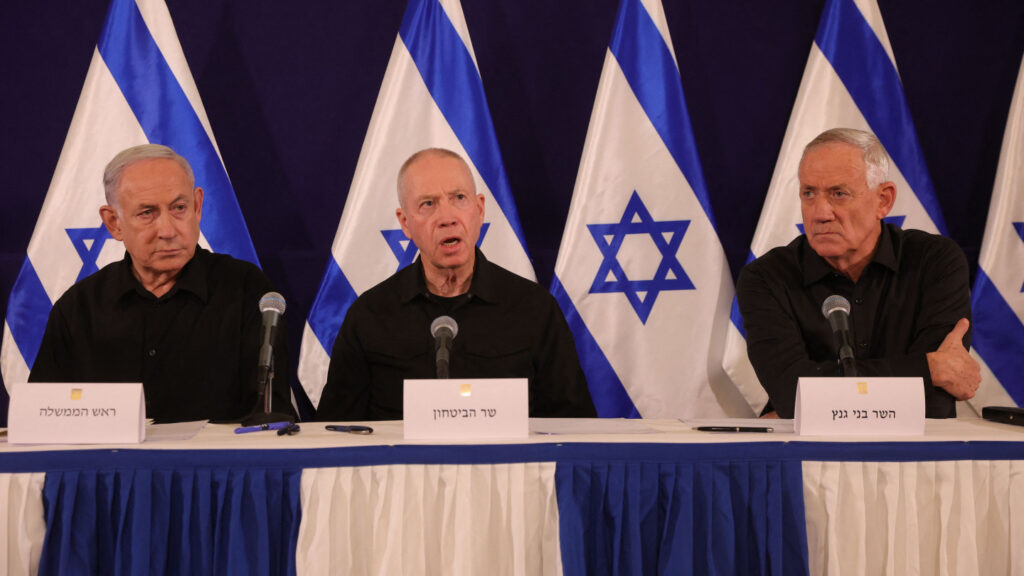
The resignation of senior member of Israel’s war cabinet Benny Gantz has left Prime Minister Benjamin Netanyahu even more beholden to his far-right allies — who have taken a hardline stance on the ceasefire deal and are pushing for escalatory policies in Gaza, the West Bank, and Lebanon.
Gantz, the leader of Israel’s centrist-right National Unity party, and his party member, Gadi Eisenkot, announced their resignation from Netanyahu’s government on June 9 after months of mounting frustration over Israel’s war policy in Gaza.
Following Gantz’s departure, on Monday Netanyahu dissolved the six-member emergency war cabinet. He is now expected to hold consultations over the war in Gaza with a small group of ministers, including Defence Minister Yoav Gallant.
While the far-right, ultranationalist ministers, Itamar Ben-Gvir and Bezalel Smotrich, were excluded from the emergency war cabinet, they hold seats on Israel’s regular security cabinet — likely to now have more decision-making power.
“[Gantz’s departure] brings the composition of the Israeli government back to its pre-October 7 composition, in which the right-wing factions have more impact on decision-making,” Nimrod Goren, a Jerusalem-based political analyst with Middle East Institute, told The New Arab.
“Now that a war cabinet with Gantz’s party was dismantled by Netanyahu, the regular cabinet with the far-right ministers may be dealing with more issues of higher significance than it did in previous months,” Goren said.
Gantz joined Netanyahu’s emergency government last year as a gesture of solidarity following the Hamas attack on October 7. Pushing for ceasefire and hostage deals, he earned the reputation as the more rational and sensible leader in Netanyahu’s ultranationalist and religious government.
Although Gantz and Eisenkot’s resignation was not enough to break Netanyahu’s 64-member majority in the Knesset (Israeli parliament) and push early elections, it has left Netanyahu alone with his far-right allies and their adamant calls to continue Israel’s onslaught on Gaza.
“He doesn’t have that fig leaf anymore; he doesn’t have any so-called moderate voices,” Mairav Zonszein, the International Crisis Group’s senior Israel-Palestine analyst, told The New Arab.