Empty fields, missed plantings: Lebanese fields barren as Syrian farmworkers displaced by war
Despite the prospect of peace from a 60-day ceasefire, Lebanon’s agricultural sector has already suffered huge losses that have left a mark on the sector and those who rely on it—Syrians and Lebanese alike.
29 November 2024
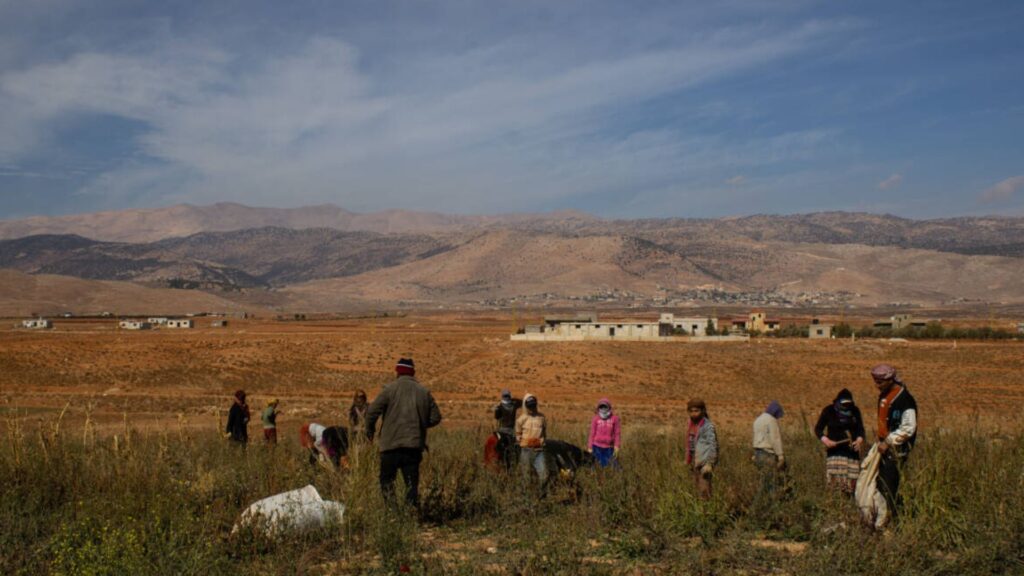
Bekaa Valley, Lebanon – Fertile fields stretch to the horizon in Chaat, a farming village in Lebanon’s eastern Bekaa Valley. In mid-November, most lay barren—untilled and unplanted—after many farmworkers fled heavy Israeli bombardment of the area.
“The seasonal harvests are left on the ground,” Muhammad Shams, a Lebanese farmer who owns around 60 dunums in Chaat, told Syria Direct.
Shams normally grows tobacco, wheat, barley and lentils with the help of six Syrian workers. However, in late September, when Israel escalated attacks on what it said were Hezbollah targets in Lebanon, all of Shams’ farmhands returned to Syria.
The plow at Shams’ farm now sits idle. Ripe black fruit dangles untouched in his grove of dozens of olive trees. “The situation is not good at all,” the farmer said. “We’re not selling anything. We’ve lost so much.”
After Israel escalated its attacks across Lebanon in late September, at least 557,000 people fled to neighboring Syria, United Nations Refugee Agency (UNHCR) Lebanon spokesperson Lisa Abou Khaled told Syria Direct. Most, about 63 percent, were Syrian.
Many Syrians who left worked in Lebanon’s agriculture sector, which relies heavily on refugee and migrant labor. As many as 80 percent of the country’s farmworkers, or 200,000 people, were estimated to be Syrian in 2016. The Bekaa Valley, the backbone of Lebanon’s food production, hosts the largest share of registered Syrian refugees in the country.
At the same time, fertile lands in the Bekaa Valley and the south were damaged by Israeli airstrikes over the past two months. Fields have been destroyed or deserted, entire harvests wasted and critical planting seasons missed.
So, despite the prospect of peace from a 60-day ceasefire deal that went into effect on November 27, Lebanon’s agricultural production has already suffered huge losses that have left a mark on the sector and those who rely on it—Syrians and Lebanese alike.