How UN aid in Syria is increasingly going to regime cronies
In-depth: Bashar al-Assad and a network of cronies have profited immensely off Syria’s war economy and the billions the UN has poured into the country.
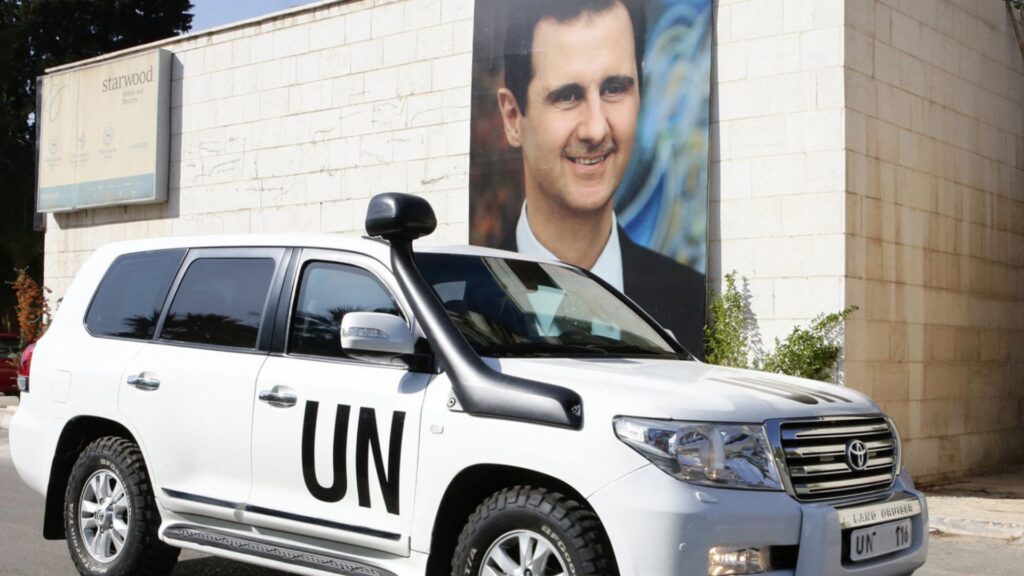
In the face of mounting evidence, the United Nations (UN) – the primary facilitator of the multi-billion-dollar humanitarian aid industry in Syria – has failed to make any impactful changes to improve the efficacy of its operations in regime-held areas, analysts say.
A report published on 22 May revealed that although the UN’s overall aid procurements within Syria decreased over 2021-2022, compared to 2019-2020, more funding went to organisations with ties to human rights abusers and sanctioned individuals, mostly cronies of Syrian President Bashar al-Assad.
Since the 2011 popular uprising, Syria has been ravaged by military campaigns that have destroyed the country’s infrastructure and displaced millions. The country has also been heavily impacted by Covid-19, a cholera outbreak, the 7.8 magnitude earthquake in February 2023, and multiple economic crises.
While funding for Syria has dwindled to all-time lows, nearly 70 percent of the Syrian population has plunged into poverty.
Meanwhile, Assad and his cronies have profited immensely off Syria’s war economy and the billions the UN has poured into the country.
“For the last 13 years, the regime has been manipulating the UN’s policies and procedures to its benefit, with the knowledge of donor states,” Noha al-Kamcha, a Syrian analyst and one of the authors of the report, told The New Arab.
“Syria is on the verge of famine and every dollar counts, but these dollars are not being used properly,” al-Kamcha stated.
The authors of the report obtained a leaked data set in July 2023 from the Syrian Ministry of Social Affairs and Employment, where the Syrian government kept track of UN-NGO partnerships. The UN had not made this data publicly available online.
The report detailed six individuals or companies – sanctioned by the US, UK, and the EU – which had been contracted by various UN bodies for amounts ranging from $137,882 up to over $33 million between 2021 and 2022.
The “vast majority” of the sanctioned suppliers are connected to the Assad regime and have “extensive ties to the security apparatus implicated in bringing about a significant part of the humanitarian catastrophe the UN’s aid is supposed to be remedying”, the report said.
The UN is not obliged to adhere to Western sanctions, however, the report said: “The continued trust between donor states – overwhelmingly Western – and the UN is creating a glaring contradiction: funding and sanctioning the same people at the same time”.