For Many Refugees, Cyprus is “Like a Prison”
A slate of hardline policies has made life for refugees in Cyprus more difficult.
Nicosia, Cyprus – In her modest home on the outskirts of the Cypriot capital, Nicosia, 21-year-old Ayah opened her phone to show a video of her recent recital. Her deep, melancholic voice rang out of the phone’s crackling speaker, and her six younger siblings gathered around her.
Ayah was singing “Zahrat al-Mada’en,” or “Flower of the Cities,” a song by the Lebanese singer Fairuz. The song is a melancholic response to the 1967 Middle East war, known to Palestinians as the Naksa (The Setback), in which Israel displaced some 430,000 Palestinians when it occupied the West Bank, including East Jerusalem, and the Gaza Strip. She expressively moved her left hand as she sang, the wide, intricately-embroidered sleeves of her traditional Palestinian dress swaying to the song’s slow beat.
For Ayah, singing has long offered an escape, a distraction from the terror she endured in Palestine and the mounting challenges she is now facing in Cyprus. After fleeing their Jenin-area village in the occupied West Bank, Ayah and her family arrived on the Mediterranean island in 2019.
In Jenin, they suffered continuous and often violent harassment by Israeli soldiers and settlers. Ayah recounted nights standing for hours outside — barefoot and wearing just pajamas — while Israeli soldiers searched their home. She described her 25-minute commute to school as “a horror movie”, where she feared the Israeli soldiers stationed at each checkpoint. “Even when we reached the school, we couldn’t feel safe. We could hear the fighting, the gunshots,” she said, “We were used to it, we were acting normal, but the fear was still there, inside.”
Although Cyprus offered safety for Ayah and her family, she said a series of recent policies targeting asylum seekers and refugees on the island has made life unbearable.
“On the streets, or at school, everyone looks at you like you’re unwanted,” Ayah said, “because you are different from them, you are not accepted”.
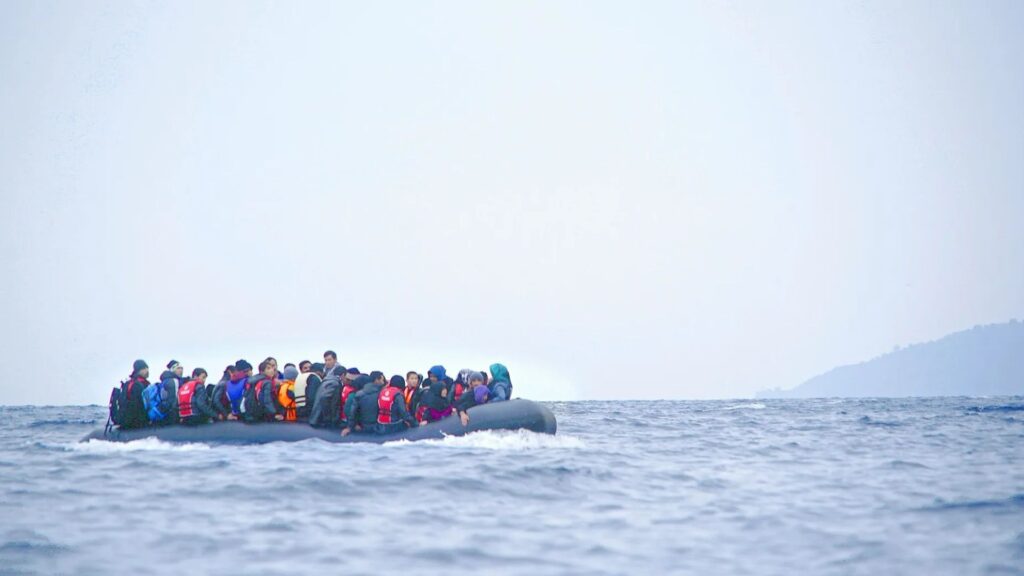
With a population of around 1.2 million, Cyprus regularly receives the most asylum applications per capita of the European Union’s 27 member states. Through the end of May this year, 4,437 people submitted applications for protection on the island, the vast majority of whom were from Syria — just a day’s boat ride away. Cyprus has adopted a series of harsh measures to stymie the number of refugee arrivals, including halting the examination of Syrians’ asylum applications and forcefully pushing back migrants at sea and on its land border with the Turkish-occupied northern part of the island.
Meanwhile, as far-right parties have gained influence in Cyprus, they have pushed an anti-migrant discourse. The uptick in anti-refugee rhetoric has fueled racist violence and encouraged the implementation of restrictive policies that have made it nearly impossible for refugees to integrate.
“You have a toxic narrative from public figures — which is very influential in society — then the society pressures them for more [anti-refugee] measures, then this brings new rhetoric and new policies,” said Doros Polykarpou, the founder of the refugee rights group KISA. “It’s a vicious cycle, which, at the end of the day, just makes people’s lives miserable.”
KISA came under attack in January when an explosive device detonated outside the office. Polykarpou said he suspects far-right attackers who wanted to intimidate them had planted it.